The urge to clumsily tear off the packaging of your favorite holiday treats and wolf them down as quickly as you can is something difficult to overcome, but the complex and multi-dimensional flavors of chocolates might give you reason enough to try.
Nationally acclaimed chocolate expert Clay Gordon discussed the steps involved in a proper chocolate taste test during the Columbus Action Corps' "Sweet Justice: Choosing Chocolates" program on Thursday, March 21. During his lecture, Gordon explained the five steps involved in chocolate tasting.
They are as follows:
Get a whiff of cocoa goodness
You may find:
A combination of subtle, strong or clear smells.
Chocolate combined with other smells, such as vanilla.
Differing levels of sweetness of chocolate smell.
| A woman takes a small sample of chocolate, closes her eyes, focuses and inhales its scent. No specific skill is needed to assess the aroma of chocolates, just focus. Credit: www.sergetheconcierge.com. |
Take a good look.
Dark chocolates are shinier than other types.
Surface of quality chocolates range from matte sheen to glossy.
Avoid chocolates with white powdery substance on the outside. It indicates improper storage and preparation.
Pinholes in chocolate means the air bubbles were not removed in process. No effect on taste.
| A random photograph of chocolates that have a quality surface with no pinholes or other worrisome imperfections. Credit: www.943thepoint.com. |
It is a snap
After smelling and seeing the chocolate, take it between your fingers and break it into pieces.
Dark chocolate should have a crisp snap.
Other chocolates have a brittle snap. This may an indication of age and/or improper storage. Negatively affects taste.
| A bar of chocolates is broken into smaller pieces after being smelled and examined. Credit: www.peepculture.com. |
To chew or to melt
Breathe in smell of chocolate as you begin to eat it.
Chew just 3 to 5 times, paying close attention to textures and try to label them. Smooth, waxy, dry, sandy, uneven sugar crystal sizes?
Do you like or dislike the textures?
After chewing the chocolate, press it against the roof of your mouth and let it melt.
Close your eyes, breathe deeply through your nose to try to recognize the smells of the chocolate.
Work from more general flavors to more specific.
| Anonymous chocolate addict tries and succeeds to slow down and take small bites of the sweet to truly taste it. Credit: www.123rf.com. |
First Taste Zones
Initial taste: First flavor of chocolate in mouth: fruitiness, bitterness, intensity of chocolate flavor and sweetness.
Middle Taste: When chewing chocolate, you will detect flavors such as woody, earthy, tobacco, herbs, floral, etc.
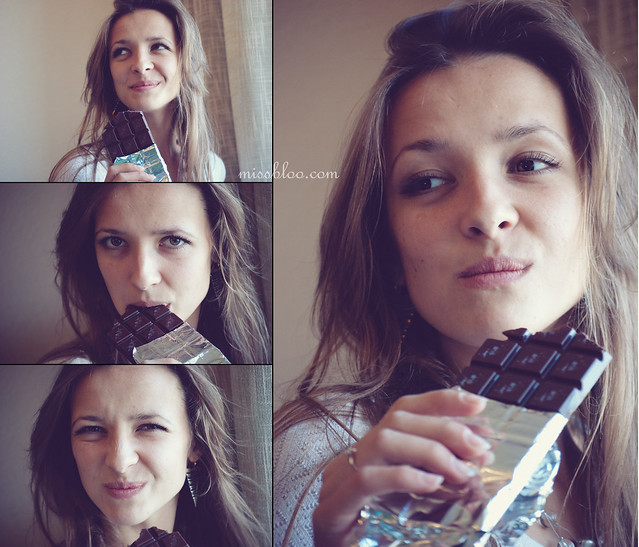 |
| Woman's facial expression changes as she takes bites of chocolate and slowly chews and then lets the chocolate melt. Credit: www.flickr.com. |
Aftertastes
Short aftertaste: A good chocolate will leave a “clean and clear” aftertaste on the tongue. Chocolates made with oils other than cocoa butter may leave a pasty feeling on the tongue.
Long aftertaste: (30 sec. after chocolate out of mouth) is how you measure quality chocolate. Should leave no off taste. Most people don’t slow down enough for this taste.
| Girl smiles as the complex aftertastes of the chocolate settle on her tongue. Credit: www.fit.webmd.com. |
NOTE: All tips and more chocolate tasting advice can be found in Clay Gordon's Book "Discover Chocolate: The Ultimate Guide to Buying, Tasting and Enjoying Fine Chocolate." You can also learn more about the different types of chocolates and how Gordon rates them by visiting his website, www.thechocolatelife.com, or by following him on Twitter at @DiscoverChoc.
Looking at all of Gordon's helpful and easy chocolate tasting tips, I hope that you are able to exercise a teeny bit of impulse control and try to slow down and savor the deep and earthy tastes of chocolates. Please remember, this advice holds true for other occasions--Christmas, Valentine's Day, rough Mondays and other emergencies.
Now, go enjoy your chocolates!
- Jessica J. Burchard, Oxfam Columbus Action Corps Co-Leader 2012-2013


No comments:
Post a Comment